


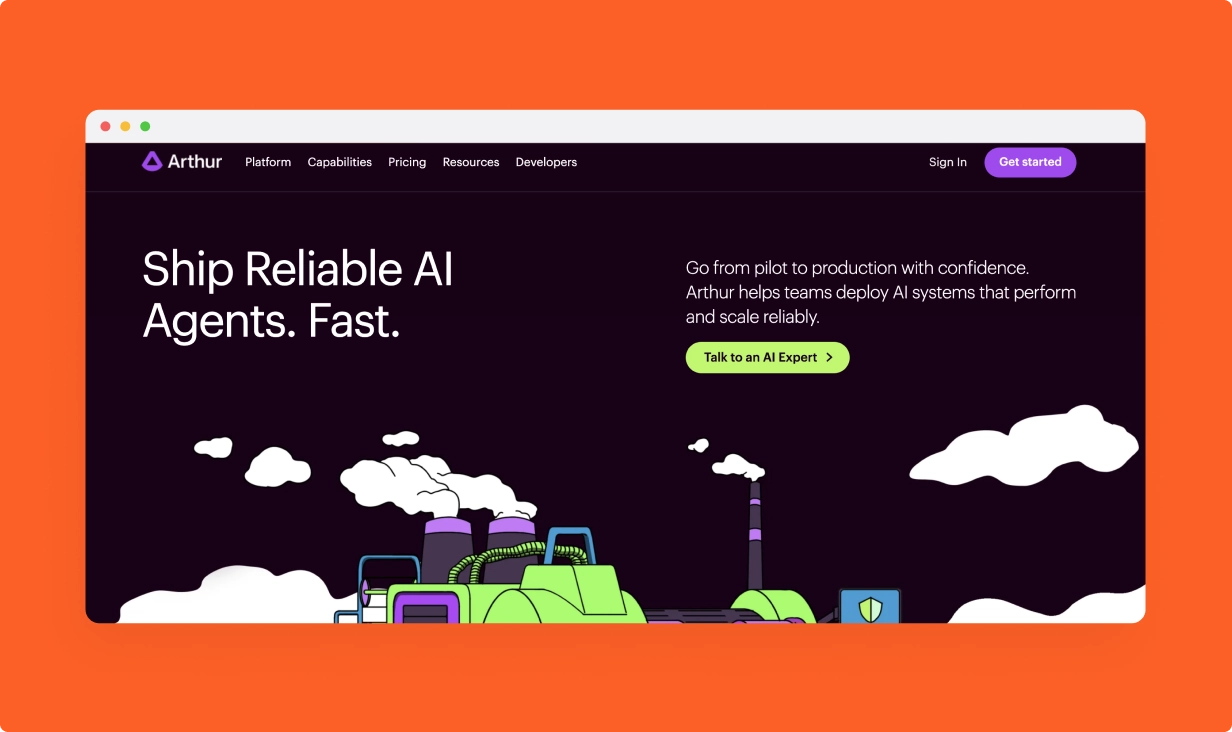
Unifying a Fragmented Platform Into a Single, High-Performance Experience
ArthurAI's product had grown into multiple disconnected frontend applications. Users faced separate logins, inconsistent dashboards, and an onboarding process that took 8 hours to complete — a manual workflow involving account provisioning, model registration, dashboard configuration, and data pipeline setup across disconnected interfaces. With no internal frontend team to address these issues, the platform's UX was becoming a bottleneck to growth. We embedded directly into their product team to unify the experience and automate the friction away.
Pain Points
Multiple separate frontend codebases meant multiple logins, inconsistent UI patterns, and a fragmented experience that undermined user confidence in the platform. The 8-hour onboarding process was a conversion barrier — prospective customers experienced friction before they could experience value. Each step (account creation, model registration, inference table configuration, alert setup) lived in a different application with different UI conventions. Without internal frontend expertise, ArthurAI had no path to resolving these issues independently.
Challenge
ArthurAI needed more than a UI refresh. The fundamental architecture — separate codebases, separate auth systems, separate design patterns — had to be unified without disrupting the existing user base. The unified platform needed to support heterogeneous model types (classification, regression, NLP, computer vision), deliver real-time monitoring dashboards with live data, and scale with the platform's growth. And the team building it needed to integrate seamlessly into ArthurAI's existing engineering organization — operating as an extension of the product team, not an outside vendor.
Solution
We embedded engineers and a dedicated Technical Program Manager (TPM) directly into ArthurAI's product team. The engagement covered both frontend unification and the workflow automation required to collapse the onboarding process:
- Architecture: Merged separate codebases into a unified monorepo with shared internal UI component packages, ensuring consistent patterns across every feature surface.
- Authentication: Consolidated multiple auth flows into a single OAuth2-based system, eliminating the multi-login problem entirely.
- Data Visualization: Built flexible inference tables that dynamically adapt to any model type — classification, regression, NLP, and computer vision outputs rendered through a single abstraction. Enhanced real-time alert dashboards with WebSocket-driven live updates.
- Onboarding Automation: Re-engineered the customer onboarding flow from a manual 8-hour process to a guided 10-minute setup — automating account provisioning, model registration, and initial dashboard configuration through a unified wizard. This required both frontend workflow design and coordination with backend API changes.
- Foundation: Component library and design system built for long-term consistency as the platform scales.
Engagement model: Embedded team with dedicated TPM, working as a direct extension of ArthurAI's product engineering organization. The TPM managed sprint planning, cross-team coordination, and delivery accountability.
Outcome
Onboarding dropped from 8 hours to 10 minutes — a 48x improvement that removed the single largest barrier to trial-to-paid conversion. The unified interface eliminated login friction and delivered a consistent experience across every feature. ArthurAI's VP of Engineering confirmed the work "increased annual recurring revenue" — the direct result of reducing the friction between a prospective customer and the platform's value. The embedded team model, with a dedicated TPM, meant the engagement operated with enterprise-grade program management from day one.